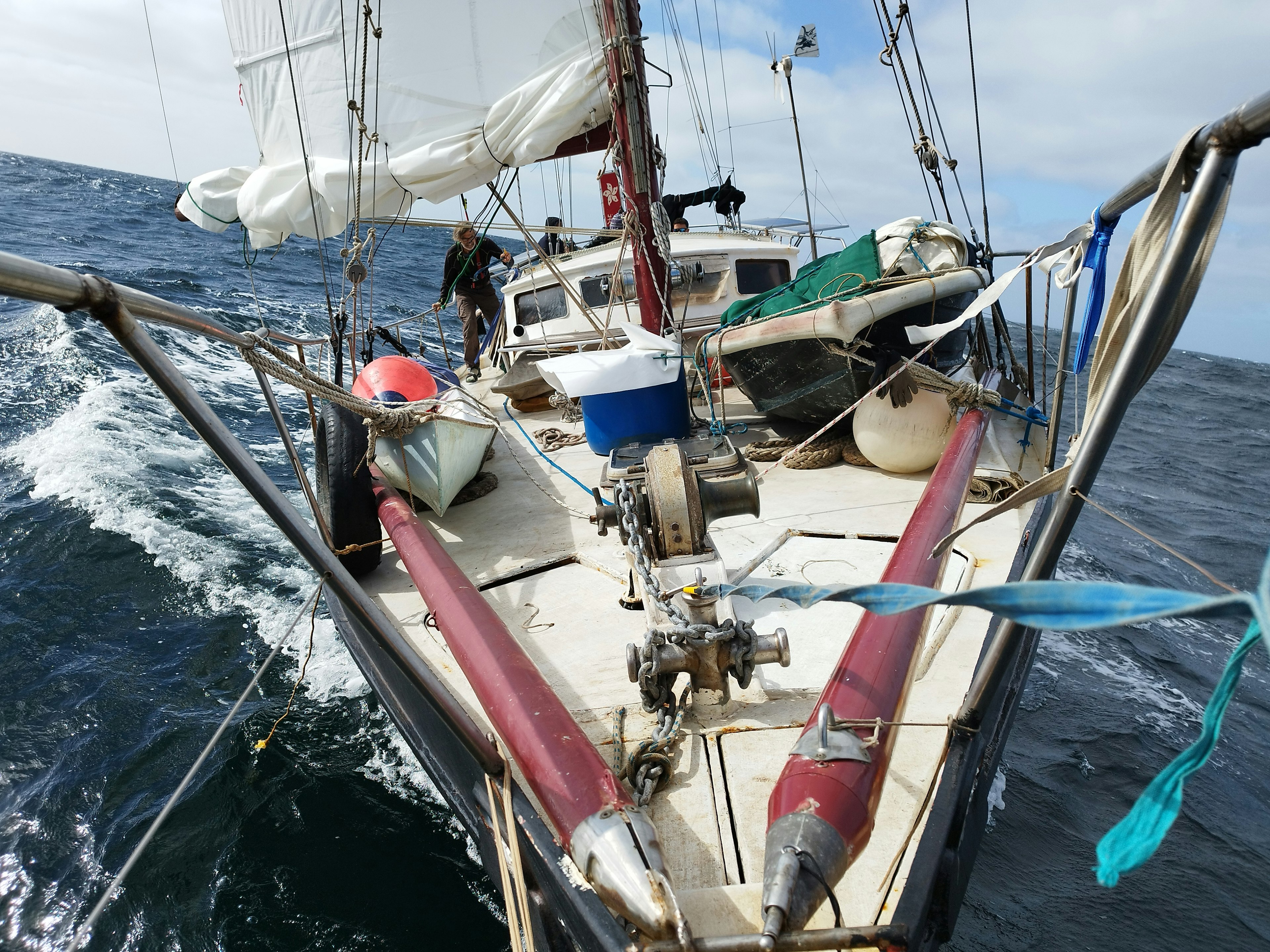
Travel tips
A comprehensive minimalist guide on adventurous travel to help you get started on the right foot
Backpacking
Pack light and you will thank me later - around 12 kg or less. You don't need a guidebook but you do need information. Reliable information can be found on wikitravel.org country and city pages. There are often more accurate and up-to-date information on the English version (e.g. Cairo Egypt). For more country or area specific information, check the country summaries at Travel Independent, the Rough Guide or simply Google. As for planning in advance or not, I think it's more a question of how you like to do it. I read in advance but I don't plan because I like my itinerary to unfold bit by bit. Another great way to get information is to talk with the locals. However be aware that what they will call amazing or must-go might be nothing special sometimes. Also keep in mind that locals often don't know too much about their own country as they don't get a chance to travel around that much. In the same way that I wouldn't be a good advice giver to someone wanting to visit Switzerland.
On accommodation, if you travel alone, dormitories are a great way to meet people and save money. Booking.com, Hostelworld and other website can be helpful to find a good place. Most of the time, there is no need to book in advance except if you find yourself in the middle of a local holiday. Couchsurfing is an amazing way to meet with locals and feel more integrated into the culture of the country - as a bonus, it will help you save money. Airbnb might be useful if you're looking for an apartment with kitchen for example.
Overland travel is one of the best ways to travel. In some parts of the world, crossing a border on foot is an unforgettable adventure. If you don't know anything about borders, you can represent it to yourself by two lines that you have to cross separated by what we call a no man's land (the portion of land that doesn't belong to neither of the two bordering countries). The first "line" is in reality a passport control checkpoint where you will get your passport stamped to acknowledge that you are exiting the country. Then the no man's land can be anything from 50m to 6km depending on the place. After you cross it, you will get to the second passport control checkpoint where your passport will get stamp for entry in the new country. I might talk about Visas on another page of the website but if you go to Central Asia, remember Caravanistan is your best friend!
Cycling
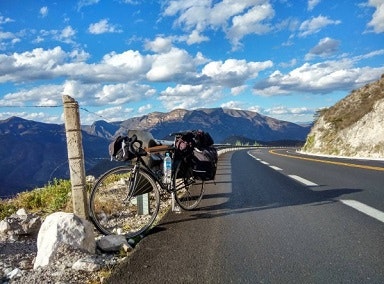
There are two ways to go. Either you prepare your touring bike at home which makes sense if you want to start cycling from home. Or you fly to your departure country, buy a bicycle there and prepare it for touring. There is nothing really complicated in the first way, you just have to choose a bike that you like and mount it with panniers. Keep in mind that touring bikes are especially designed for mounting panniers and there is enough space between the pedal and the rear panniers so that when you pedal the back of your foot doesn't hit the panniers which might not be the case with a mountain bike for example! Though it's totally possible to travel with a MTB. The second way is more challenging and adventurous as you can't predict how easy it will be to secure a bike. It takes a little time to do research and you might scout bike shops for brand new touring bike. However in my opinion the best option is to figure out what is the most popular local sell & buy website and look for a second-hand touring bike there. You could look for these kind of bikes as they are all solid bikes for 2000$ or under when new: Trek 520, Santos Travelmaster, Thron Sherpa, Surly Long Haul Trucker, Fahrrad Manufaktur TX-400, Ridgeback Panorama. These are long distance touring bikes with a frame in iron that is not likely to break and a lot of spokes to make your wheels more robust. You can go 20'000 km with a Surly Long Haul Trucker without breaking a wheel for example.
On wheel size, there is a whole debate on the topic but in my opinion it doesn't really matter. The only thing that I can tell you is that it was sometimes really hard to find spare tubes for my 700x32c tires (like for example in Nicaragua or Colombia). On tire width, 32c was fine to ride all the way from Mexico to Colombia. However I felt like I would have preferred a wider tire at least on the back wheel. And most importantly 32 was not a standard size so it made it harder to find tubes again. Figuring out what kind of tubes they sell in stores and going with that size is a much smarter strategy. On gears, what matters is how low your lowest gears is and that is really important if you plan cycling very hilly areas like South of Mexico. Once again pack light!
For sleeping you can choose between a tent or a hammock depending on where you plan to tour. Sleeping in my hammock in Latin America was fine as there were plenty of trees for example. You don't need cooking gears as you can find food on the road almost everywhere in the world. But cooking is fun and helps you to save money sometimes. If you camp outside, stealth camping is the way to go. It's better if nobody knows where you are sleeping as they won't be tempted to rob you. Take your time to pick a good spot before the night starts to fall. Another great way to meet locals and get a shower is Warmshowers - equivalent of Couchsurfing except it's for cyclists.
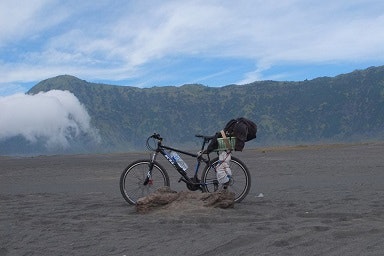
Motorbiking
Traveling by motorbike is all about freedom. In my opinion, it's not as rewarding as cycle touring because you just have to turn the throttle and you are already covering huge stretch of land though it does feel amazing! Again the two ways applies, buy and prepare at home or buy abroad and travel from there. However there is a catch. As a bicycle can cross borders with you like your backpack would, a motorbike is a vehicle that needs its paperwork to be let through. Every time you cross a border with your motorbike it's a temporary importation and borders officials want to see that the motorbike is yours and that you are not doing an import/export business. I'm not an expert on the topic so I won't expand for the moment. Horizons Unlimited is a good place to find information on the topic.
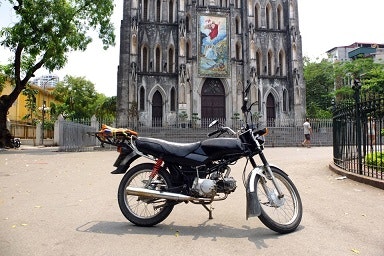
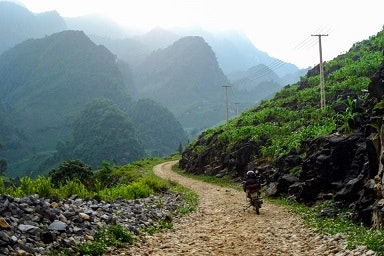
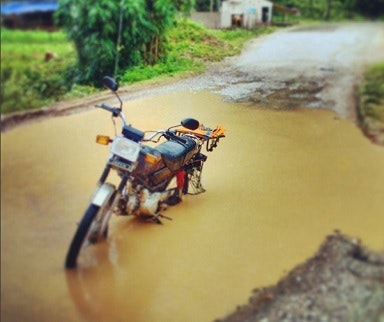
They are places on the world where it's made easier to buy a motorbike and travel with it. For example in Vietnam you can easily buy a cheap 110cc Honda Win or Minsk. You can even cross border with Laos and maybe Cambodia or even Thailand if you pay attention to fill the paperwork at each borders - and you get lucky. I was stopped at the Cambodian border after having crossed Vietnam and Laos with my Honda Win but I think I didn't fill all the papers when I entered Laos - or maybe I wasn't lucky that day, I would never know. It's also possible to buy a Royal Enfield in India and travel around the country.
Hitchhiking
Ah the joys of traveling by hitchhiking. First I would like you to know that it's totally possible to hitchhike around the world and even hitchhike planes and boats - yes means free tickets. Quite a lot of people have done it and it might take around 5 years to go all around the globe. As an example, my friend Jeremy Marie from France has done it. Hitchhiking might be the most challenging way to travel for someone like me because it means giving up all the control and totally relying on strangers. Oh I surely don't like it! However it's a great way to travel on a very low budget. It's also great for learning languages as you will get plenty of time to practice with local people and I've heard about people getting a good level in local language thanks to traveling by hitchhiking. More information coming soon but you can learn all you need to know to get started on Hitchwiki.
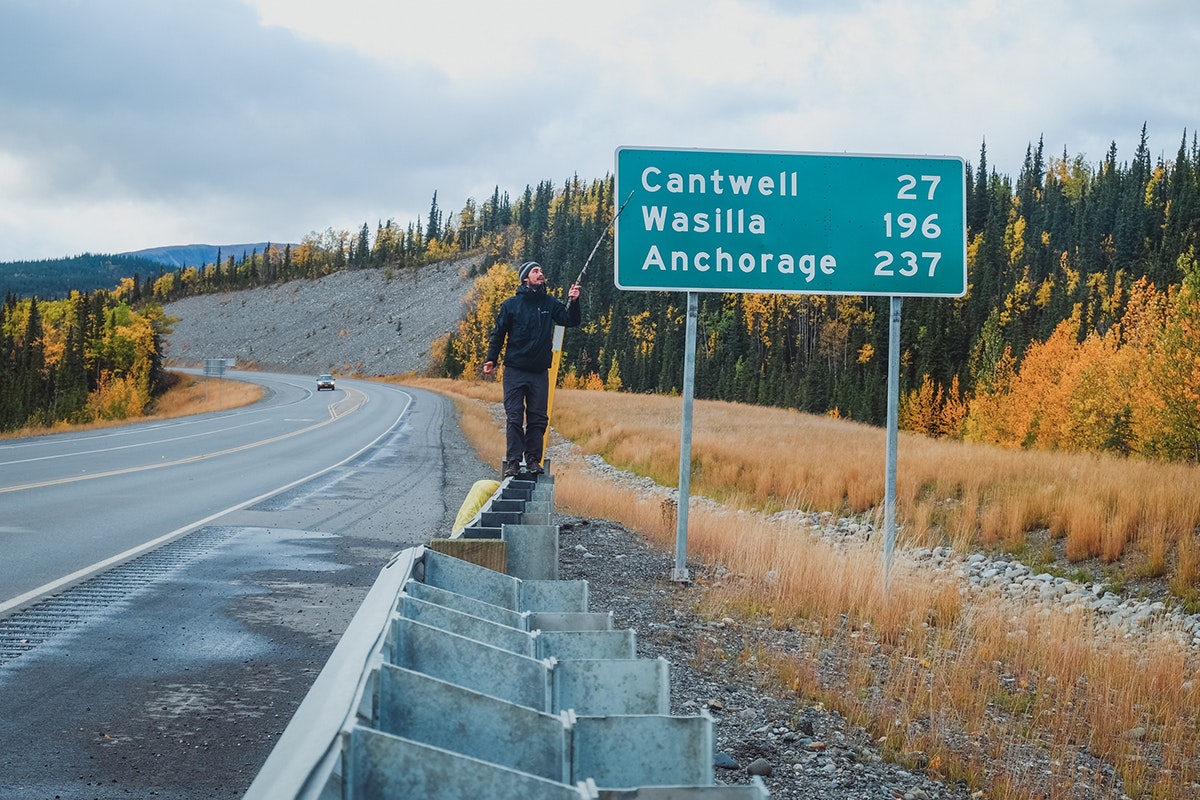
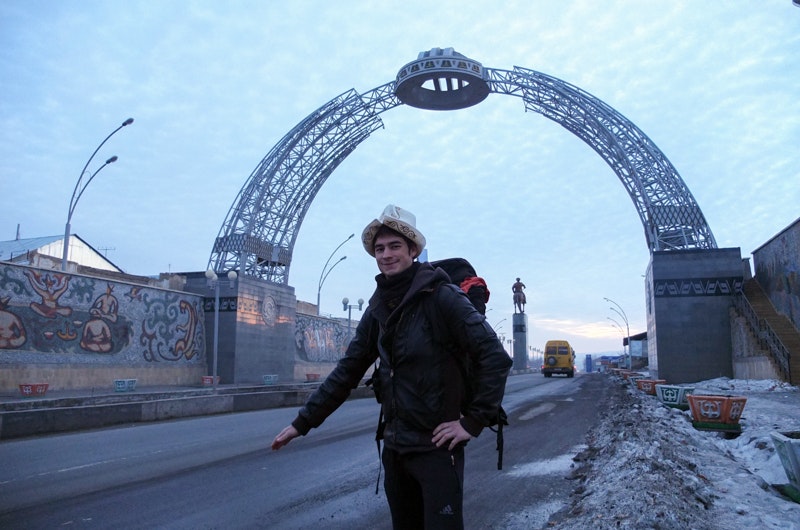
Hitchhiking in Alaska was great though. And in Japan it worked wonder as well. I'm now totally in peace with hitchhiking. Some of the frustration I had with it probably came from a mix of starting in a difficult place (Kirgizstan/China) and not having enough experience. The best advice I can give today is to read Hitchwiki and try to get advice from other hitchhikers. If one day I become an expert, I will rewrite this section to give more specific advice.
Overlanding
This minimalist guide is based on my experience overlanding across Middle East & East Africa
Vehicle choice & preparation
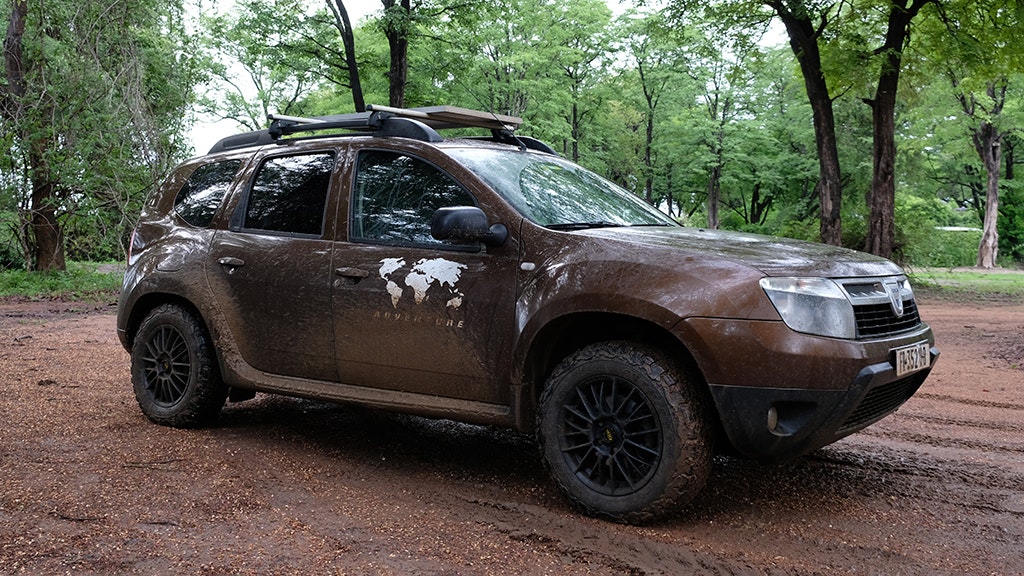
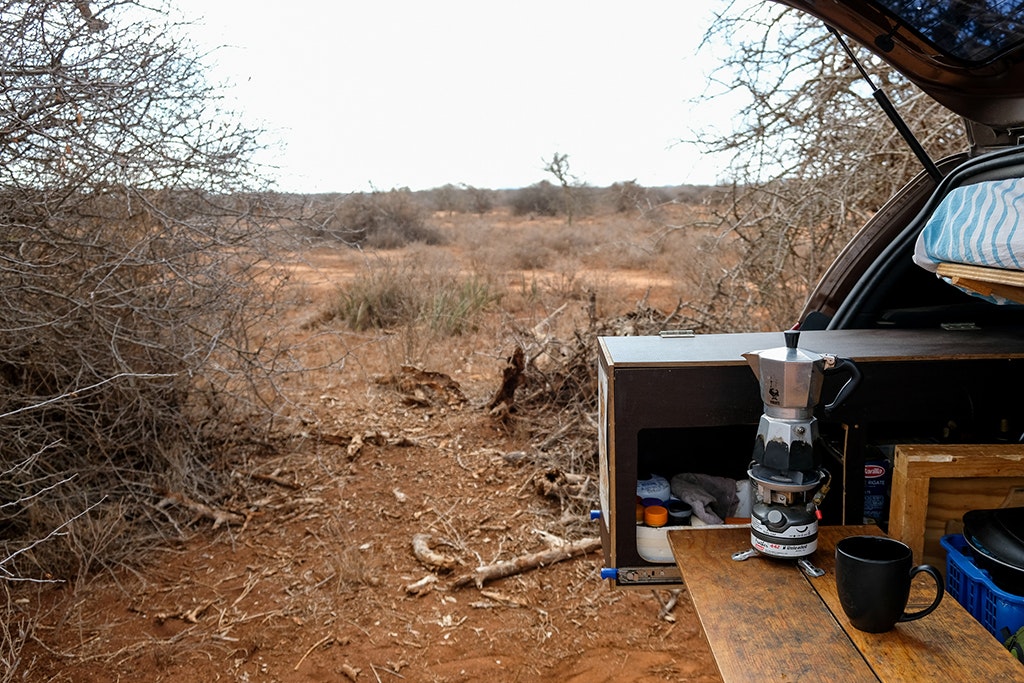
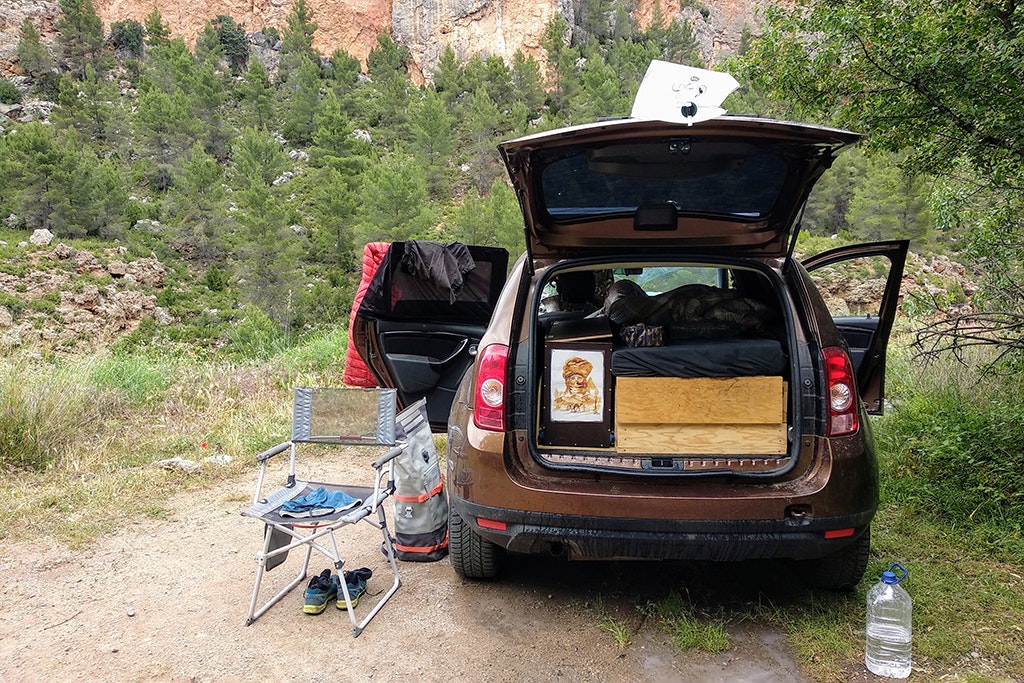
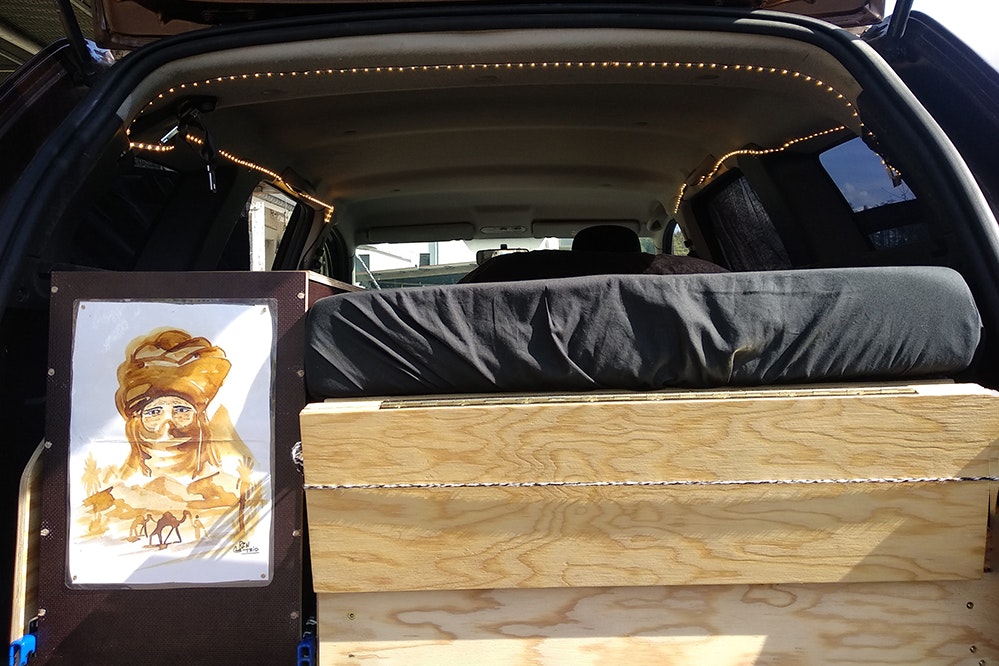
Choosing and preparing a vehicle to overland across Africa can be a daunting task. Reading on the subject, will quickly get you overwhelmed by all the seemingly necessary off-roading equipment. While it is true that to access certain specific areas of the African continent, a well prepared 4WD vehicle with high ground clearance is necessary, it is wrong to assume that everything is a must. It is totally possible to cross most of Africa in a 2WD car or even a scooter (it has been done!). What you have to figure out is what you want to do while you’re there, how remote do you want to wander. And, of course, you have to consider your budget because let me tell you that a fully equipped Toyota Land Cruiser with rooftop tent doesn’t cost the same as a simple 4WD Dacia Duster with a bed frame and cooking equipment. However, both can go pretty remote!
Do you really need a snorkel, a high-lift jack, two 20L jerrycan of diesel, another spare wheel? And the list goes on and on. Well, it depends. It depends mostly on how much real exploration you want to do, as well as your character, and how you react to solving problems on your own in the middle of nowhere.
For me, essentials are:
- Good tires
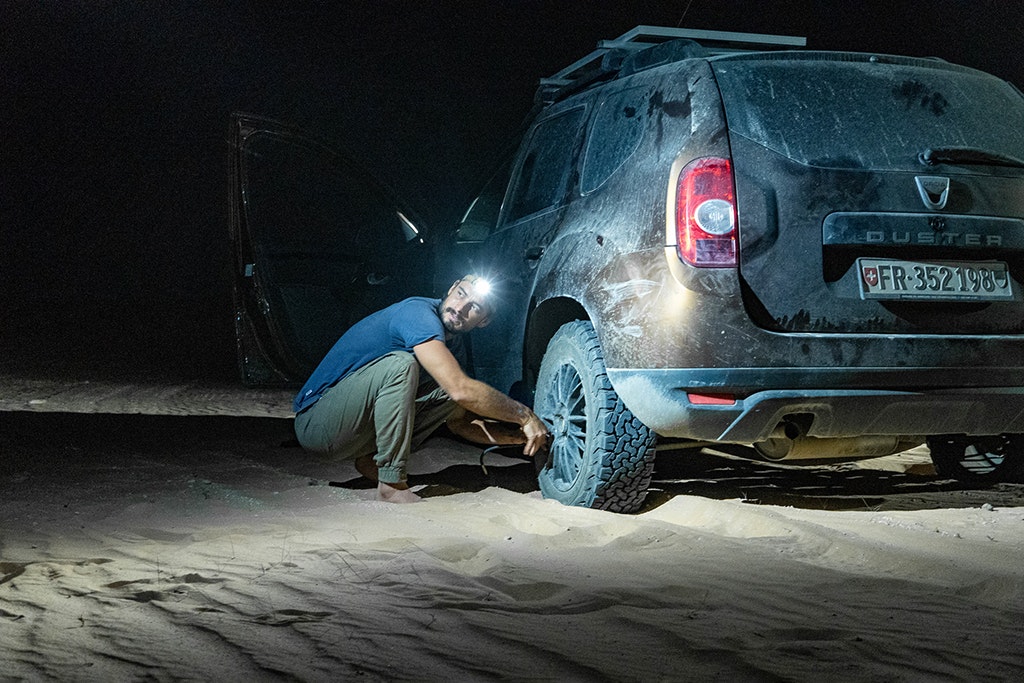
- 12V air compressor
- Tire repair kit
- Fuel jerrycan
- Water jerrycan
- Cooking equipment
- Safe box
Nice to have: a solar setup, a fridge and a shovel.
Border crossings & paperwork
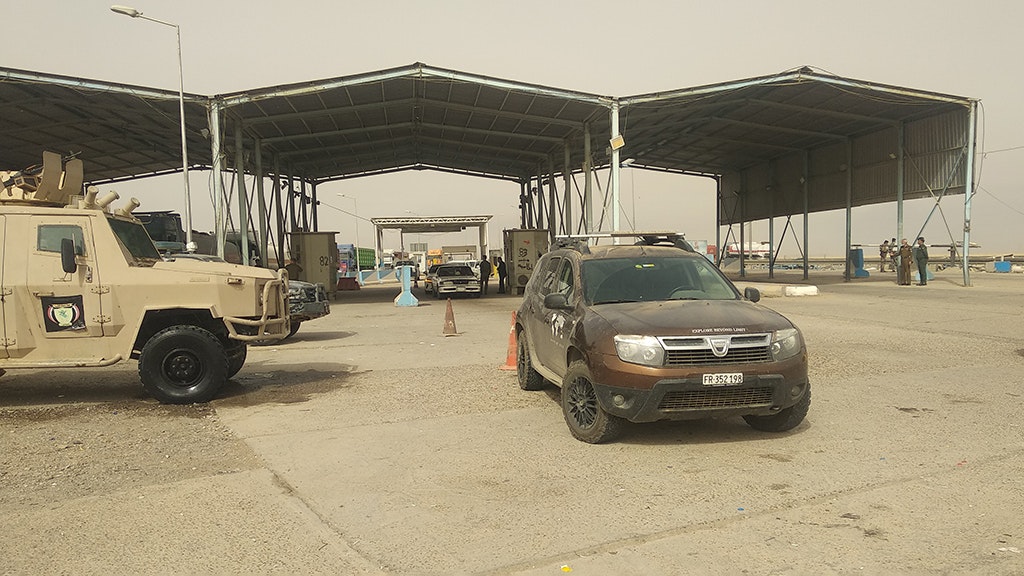
When crossing borders with a vehicle, you have to clear two entities, yourself and the vehicle. Clearing your personal entry into/exit from the country is done at the border with immigration officers. Clearing the vehicle temporary importation/exportation is done with customs at the border as well. Basically, you have to make sure that you are in order with customs and immigration on each side of the border. Knowing that a border consists of two different sides, the side of the country you came from and the side of the country you are trying to enter, this two countries have their own jurisdiction and rules so be sure to clear both sides properly to avoid potential problems when leaving. If the officials make a mistake upon entry and you didn't notice, you will be the one to pay for it when leaving (happened to me in Jordan when the customs made a mistake and they fined me on exit!).
The right paperwork needs to be done in advance. Regarding immigration this usually means visas. Visas can sometimes be obtained online a few days in advance while other times you need to apply at the consulate of the country you want to visit. It can usually be done in the preceding country (i.e. a visit to the Sudanese consulate in Aswan in Egypt would give you the chance to apply for a Sudanese visa; West Africa is an exception to this rule where you can usually just apply for your visas on the go. West Africa is known to be a nightmare for the visa game and a couple of countries on the west route will require extra energy from you in order to chase a visa in a consulate 3-4 countries ahead on your route). Sometimes, you don’t need a visa at all and your passeport will just be stamped by immigration on entry and exit. Other times, you can obtain your visa directly at the border. Visa regulations change all the time and depends on your passport and nationality. Always seek up-to-date information online or from first-hand experience.
Regarding customs, you can often ask for a TIP (temporary import permit) for your vehicle which is normally free. However, some countries are known to require a document called “Carnet de Passage” (i.e. Egypt or Kenya). Decide for yourself if you need one depending on your route. If you do, you can apply for it via the Automobile Club in your home country. It is expensive and you will have to pay a deposit that you will get back only when you can show proof of all exit stamps for the countries for which you used the carnet to enter. Entering countries where the carnet is not required, you don’t have to use it and then the TIP is free, simply don’t show your carnet because you are liable and could lose your deposit in case of problem. Normally, you have to bring the vehicle back home and get a certificate of presence from the customs in order to get your deposit back. But in some case, the Automobile Club might let you cancel your carnet and refund the deposit provided that you can show proof of all entry and exit stamps. The purpose of this document is to prevent you from selling your car in a foreign country. It gives customs a warranty, knowing that they can claim your deposit if you don’t take the car out of the country.
Overlanding logistics
Navigation. Nowadays, a smartphone is good enough as you don’t need an Internet connection to get a GPS location (please educate yourself! read how GPS works). You can download offline maps in advance or as you go. Good paper maps, however, are always a good addition to GPS navigation providing that you know how to use them. I found paper maps useful in Southern Africa mainly for the possibility to differentiate between different types of roads: main, secondary, gravel and off road.
Fuel. Fill up before the light turns on. Filling up when the tank is still half full is a good idea. Beware of the quality of diesel in the Middle East and Arabic peninsula. If you have a Diesel Particulate Filter (DPF) on your exhaust, it will clog up eventually. A pre-filter might help but there is no guarantee that your exhaust won’t clog. I had to gut out my DPF in Kenya as my exhaust had eventually gotten completely blocked. Better start such a journey without DPF.
Water. Without water, you can die. It's as simple as that. Don’t forget to fill up your drinking water reserves. I used a 20 liters jerrycan and it was enough most of the time because water is usually easy to find (where there are people there is water). In case I would stay remote for a long time I would just buy a couple of 5 liters water jugs from the supermarket.
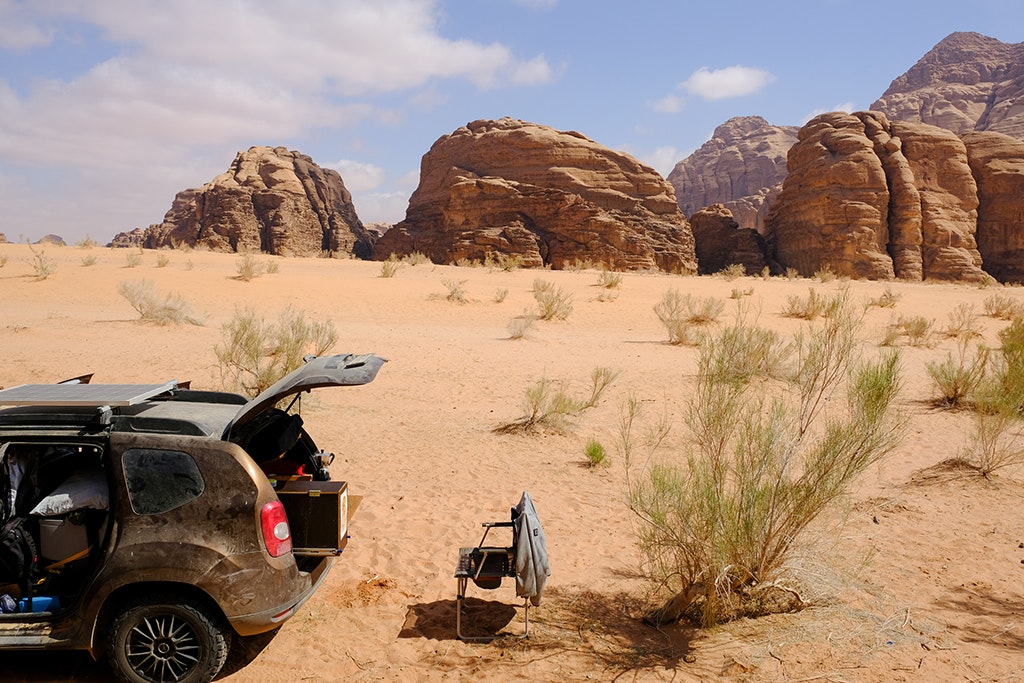
Sleep. Rooftop tent are nice but you have to open and close them every time you want to move the car. That means you have to close your tent when you must go for that quick resupplying mission to the supermarket. Also when it’s windy or very rainy, it can be hard to fall asleep. Sleeping inside the car gives you additional safety though keep in mind that a window can easily be broken so don’t think the additional safety will let you sleep in dodgy places. Pick your camping spots wisely! I loved the fact that I had a bed ready inside my car and could sleep anywhere hidden by a curtain and tinted windows. The main downside was that when the outside temperature would reach 25°C or more, it was impossible to sleep without opening the door completely. That is why I like to have additional sleeping equipment like a hammock or a tent for example.
Safety. Safety is a tricky topic. You can’t control it. The best you can do is to try to get a real feel of where you are and where you plan to go. You can’t always trust locals, as it's often the case, human beings will be afraid of the unknown like for example in Turkey when I explained that my plans were to cross the border to go to Iran. Everyone tried to discourage me, telling me that I would get killed, while the truth is that Iran is a very safe country to visit as a foreigner. The same goes with most parts of Iraq. But you can’t really know before you get real on-the-ground reports or first-hand experience. This has prevented me many times of going through places I really wish I had gone to. The fear transmitted by people about places where they actually had never been but that, for some obscure reasons, they thought they should prevent people you from going. In the end, you must make you own choice about how much risk you are willing to take! Also, it requires a lot of common sense and to adopt an appopriate behaviour in accordance with where you are. For example, I would never take out my laptop in some parts of the world, not even a cell phone. You have to understand that when people have nothing, everything has value. Everything.
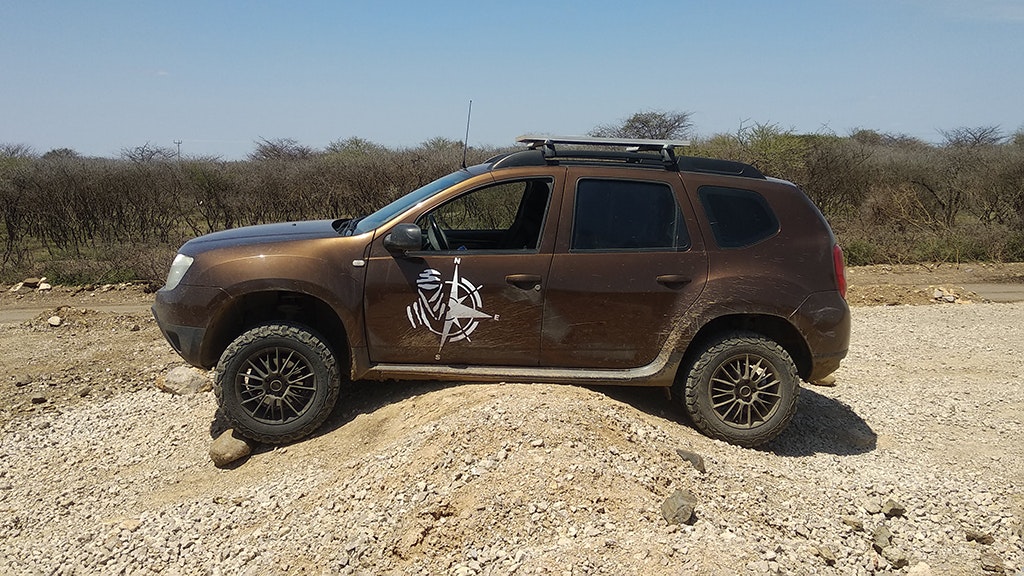
Duster Camper Build
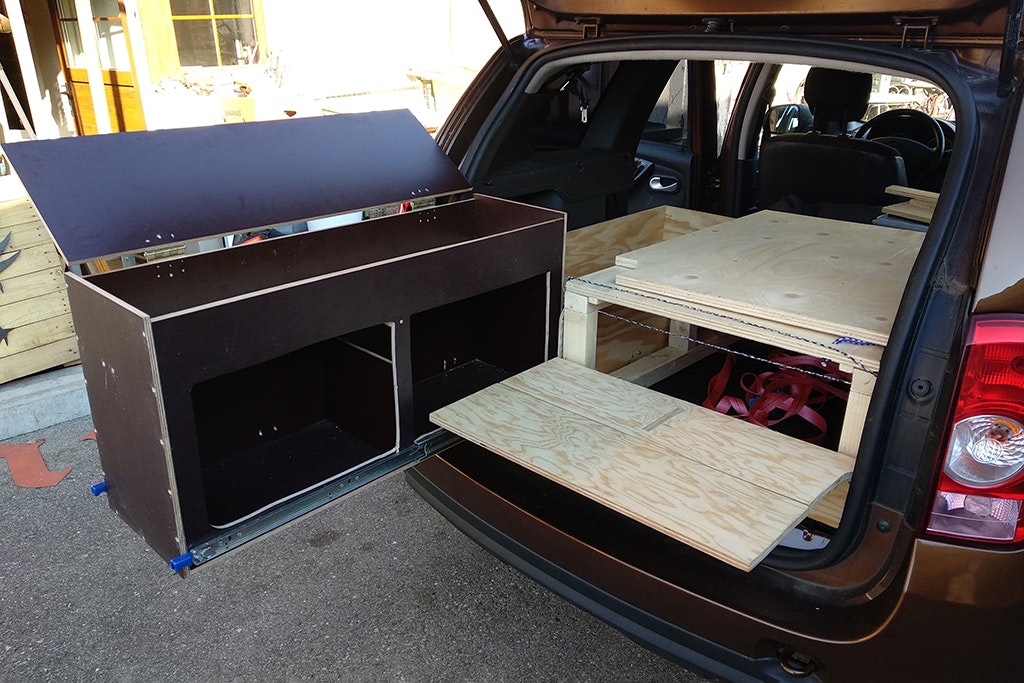
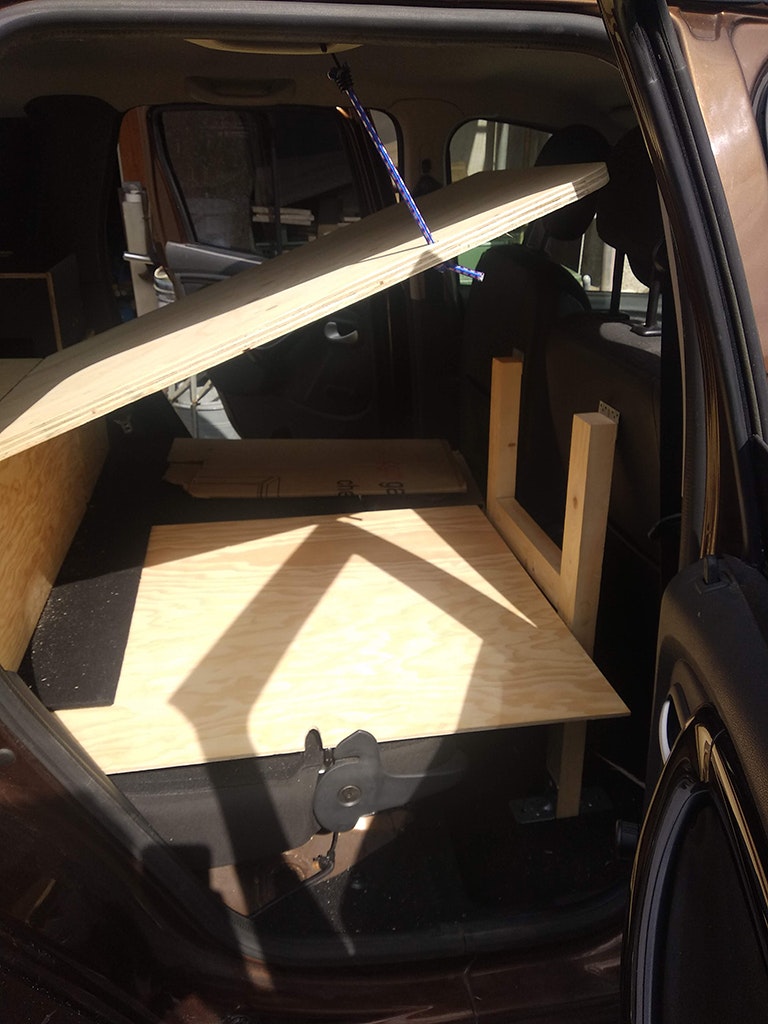
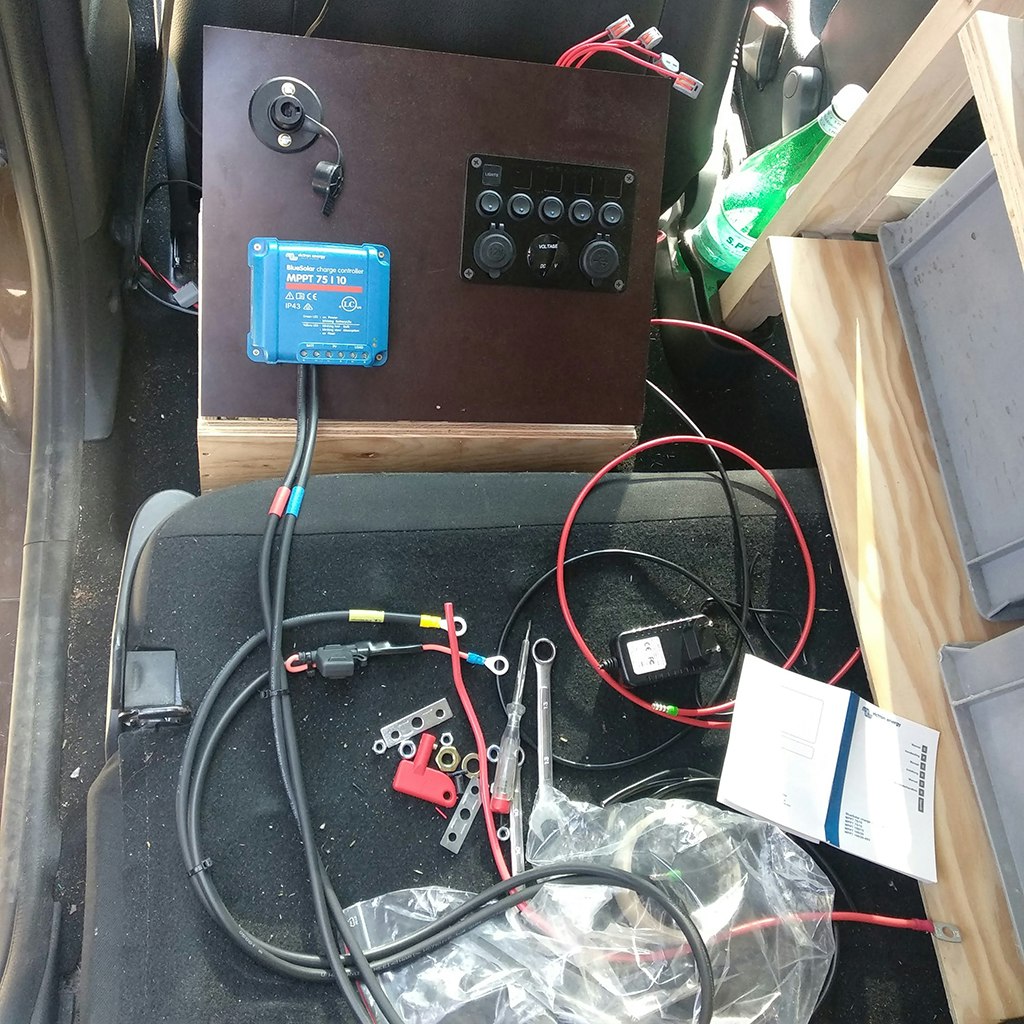
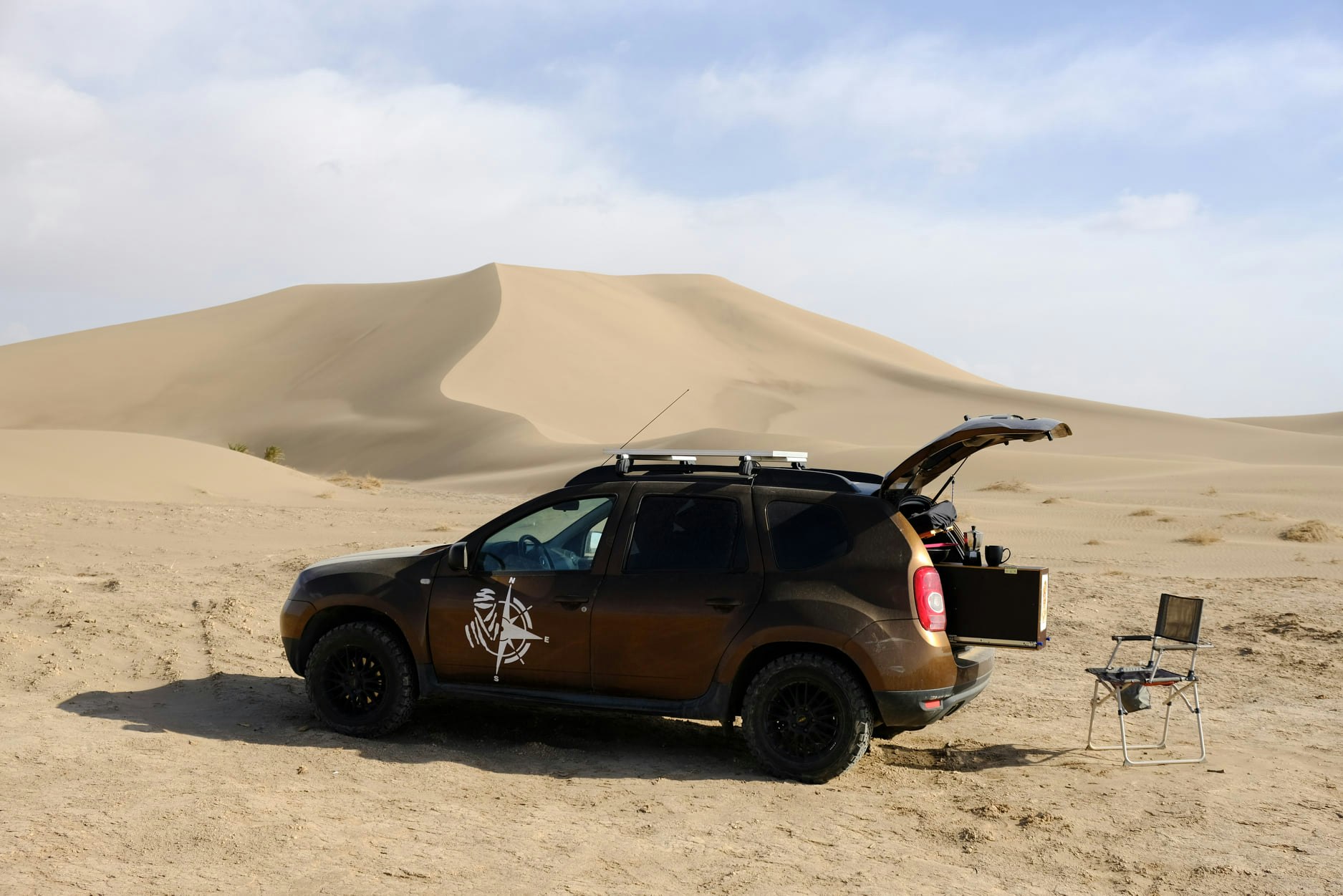
Postcard: Dusty in Iran!
Sailing
Coming soon...